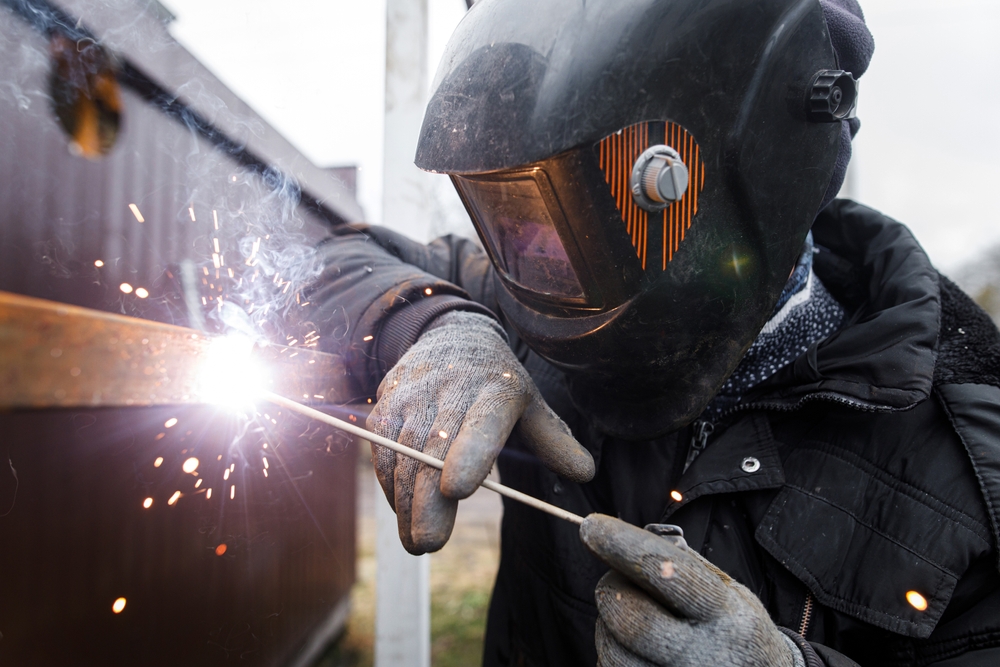
Stick welding, also known as Shielded Metal Arc Welding (SMAW), is one of the oldest and most reliable welding techniques. It’s particularly well-suited for outdoor and heavy-duty applications, making it a favorite among welders working in construction, shipbuilding, and pipeline installation. If you’re looking for a welding process that’s durable, cost-effective, and versatile, stick welding might be the right choice for you.
What Is Stick Welding?
Stick welding involves using a consumable electrode coated with flux. When the electrode comes into contact with the base metal, it creates an electric arc that melts both the electrode and the metal. The flux coating vaporizes during welding, producing a shielding gas that protects the weld from atmospheric contamination. This ensures a strong, clean weld even in less-than-ideal conditions.
Why Choose Stick Welding?
- Versatility: Stick welding works well on a wide range of materials, including steel, cast iron, and stainless steel.
- Portability: Stick welders are compact and do not require external shielding gas, making them easy to transport and use in remote locations.
- Cost-Effective: The equipment and consumables are relatively inexpensive compared to other welding methods.
- Resilience: Stick welding is highly effective in outdoor settings and can handle windy, rainy, or dirty environments better than MIG or TIG welding.
Essential Equipment
To get started with stick welding, you’ll need the following:
- Stick Welder: Choose a machine with adjustable amperage to suit various electrode types and material thicknesses.
- Electrodes: Common types include E6010 and E7018, selected based on the material and application.
- Safety Gear: Use a welding helmet, gloves, jacket, and steel-toed boots to protect yourself from sparks and heat.
- Chipping Hammer: Essential for removing slag from the weld bead after completion.
- Wire Brush: Use to clean the weld area before and after welding.
Steps to Start Stick Welding
- Prepare the Metal: Clean the base material to remove rust, oil, or paint for optimal weld quality.
- Select the Electrode: Match the electrode type and size to your project’s material and thickness.
- Adjust Amperage: Set your welder to the correct amperage based on the electrode size and material.
- Strike the Arc: Tap or scratch the electrode against the metal to initiate the arc, similar to striking a match.
- Control the Bead: Maintain a consistent angle and travel speed to produce a clean, even weld bead.
- Remove Slag: After completing the weld, use a chipping hammer and wire brush to remove slag for a smooth finish.
Common Challenges
- Porosity: Caused by insufficient cleaning of the base metal or incorrect electrode angles.
- Under-Cutting: Moving the electrode too quickly can create a groove along the edge of the weld.
- Electrode Sticking: Occurs if the arc length is too short. Practice maintaining a steady hand to avoid this issue.
Conclusion
Stick welding is a versatile and robust welding method suitable for a variety of applications. While it may take some practice to master, the rewards of learning this skill are well worth the effort. With the right equipment and techniques, you can create strong, reliable welds for virtually any project.