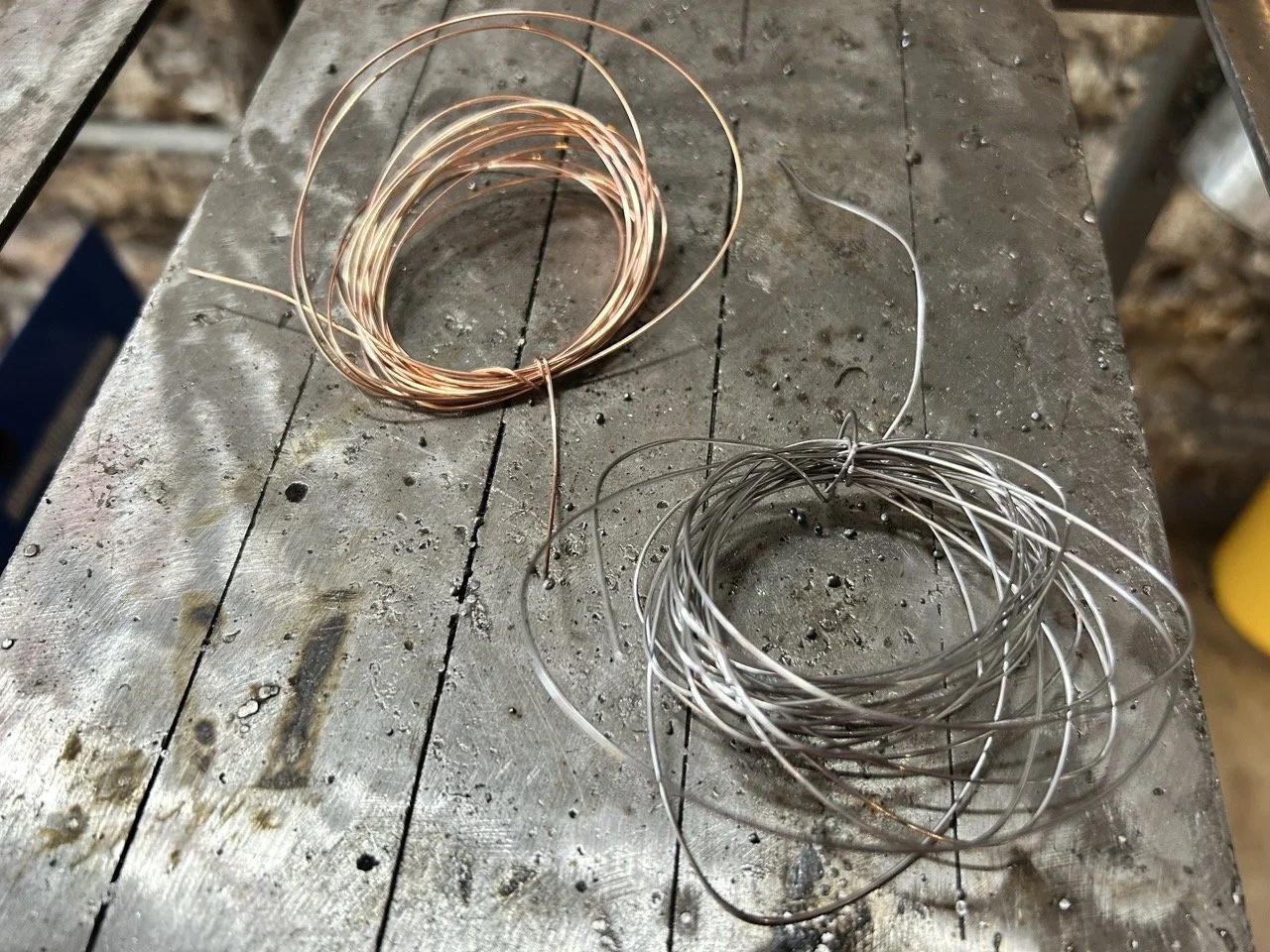
Two Wires, Very Different Results
From a distance, MIG and flux-core (FCAW) look identical — same gun, same wire feed, same machine. But they behave very differently and excel in different situations. Understanding when to run which can save you hours of frustration.
How They're Different
MIG (GMAW) uses a solid wire electrode and relies on an external shielding gas (typically C25 or 100% CO₂) to protect the weld puddle from atmospheric contamination.
Flux-core (FCAW) uses a hollow wire filled with flux. The flux burns and creates its own shielding. There are two types: gas-shielded (FCAW-G) which uses external gas too, and self-shielded (FCAW-S) which needs no gas at all.
When MIG Wins
- Clean metal in a shop environment — MIG produces cleaner, prettier welds on prepared material
- Thin material — solid wire gives better control on 18ga and thinner
- Stainless and aluminum — flux-core isn't practical for these
- Appearance matters — MIG beads are smoother and require less cleanup
When Flux-Core Wins
- Outdoor or windy conditions — self-shielded FCAW doesn't care about wind disrupting gas coverage
- Rusty or dirty metal — flux-core burns through contamination better than solid wire
- Thick material — flux-core runs hotter and penetrates deeper
- No gas cylinder available — self-shielded FCAW is the answer
- Structural work — gas-shielded flux-core meets AWS D1.1 structural requirements
The Settings Difference
Flux-core runs hotter than solid wire at the same settings. When switching from MIG to FCAW on the same machine, reduce your voltage by 1–2V and adjust wire feed accordingly. Also note: flux-core produces a slag that must be chipped away between passes — don't skip this step.
Bottom Line
Most fabrication shops run both. MIG for clean shop work, flux-core for field repairs and heavy structural. If you're buying your first wire welder and plan to work outdoors, get a machine that runs both — it's one of the best investments in versatility you can make.